Menu

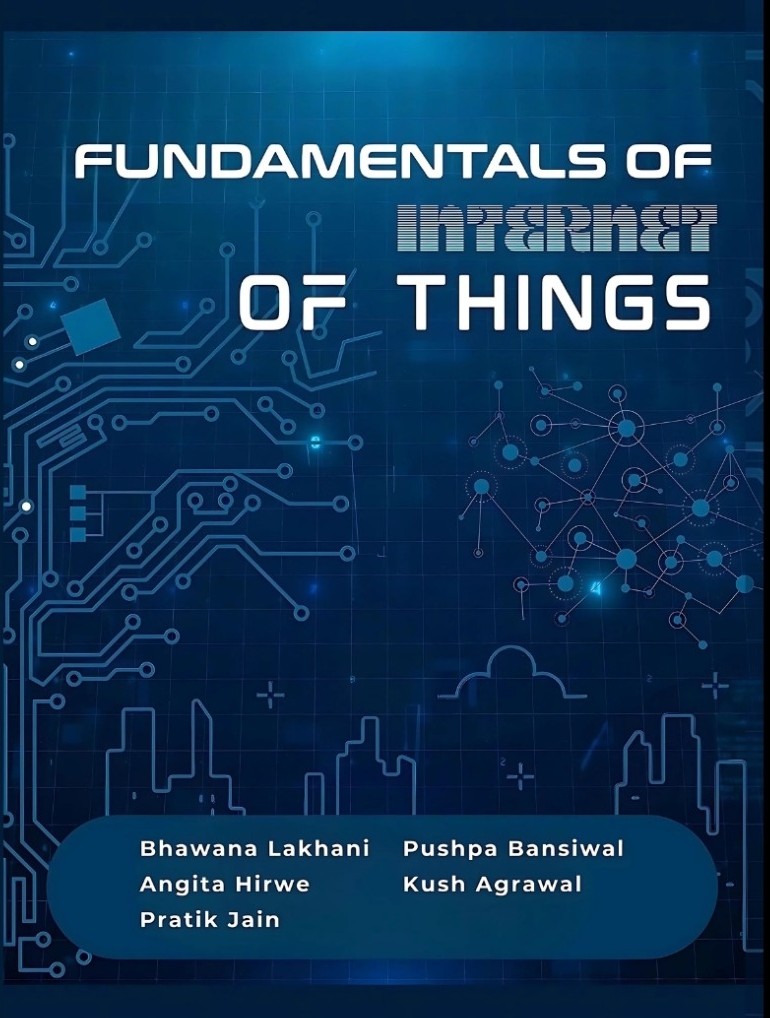
Fundamentals of Internet of Things
Published Text

Fundamentals of Internet of Things

UNDERSTANDING THE BUILDING BLOCKS OF THE CONNECTED WORLD.

A comprehensive guide to the architecture, protocols, and practical applications of IoT systems in the modern connected era.

AuthorKush Agrawal
PublisherGuru-Shishya Publication
CategoryIoT & Embedded Systems
Year2024
Pages210 Pages
EditionFirst Edition
ISBN978-93-48717-31-3

About The Book

The Internet of Things (IoT) is transforming the way devices connect, communicate, and make decisions. This book is designed for students, engineers, and hobbyists who want a strong foundation in IoT concepts and their practical implementation. From basic components like sensors and actuators to advanced topics like cloud computing, MQTT protocol, and security challenges, this book covers everything with simple explanations and real-world examples. Each chapter includes diagrams, use-cases, and mini projects to help readers grasp concepts effectively. We bridge the gap between theoretical models and actual hardware implementations.
Why I Wrote This

During my academic journey, I noticed a significant gap between theoretical IoT concepts taught in classrooms and the practical skills required to build real-world connected systems. Many students struggled to understand how a sensor actually communicates with a cloud backend. I wrote this book to demystify these protocols. By breaking down complex architectures into digestible, hands-on modules, I aim to empower the next generation of engineers to build smarter, more efficient connected devices.

What You'll Learn

IoT Architecture

Understand the layered architecture of IoT systems.

Sensors & Actuators

Learn about different sensors, actuators and their applications.

Communication Protocols

Explore MQTT, CoAP, HTTP and other protocols.

Cloud Integration

Connect devices to cloud platforms and manage data efficiently.

Writing & Research Process

The research for this book involved dissecting various enterprise IoT architectures and distilling them into fundamental principles. The drafting process was highly iterative; I constantly validated concepts by building small prototypes. Simplification was the hardest part—translating a complex cloud-to-edge communication model into a diagram that a first-year student could understand required numerous revisions and peer reviews from fellow developers.

Continue Exploring

See how the concepts discussed in this book are applied in my real-world engineering projects and technical blog articles.